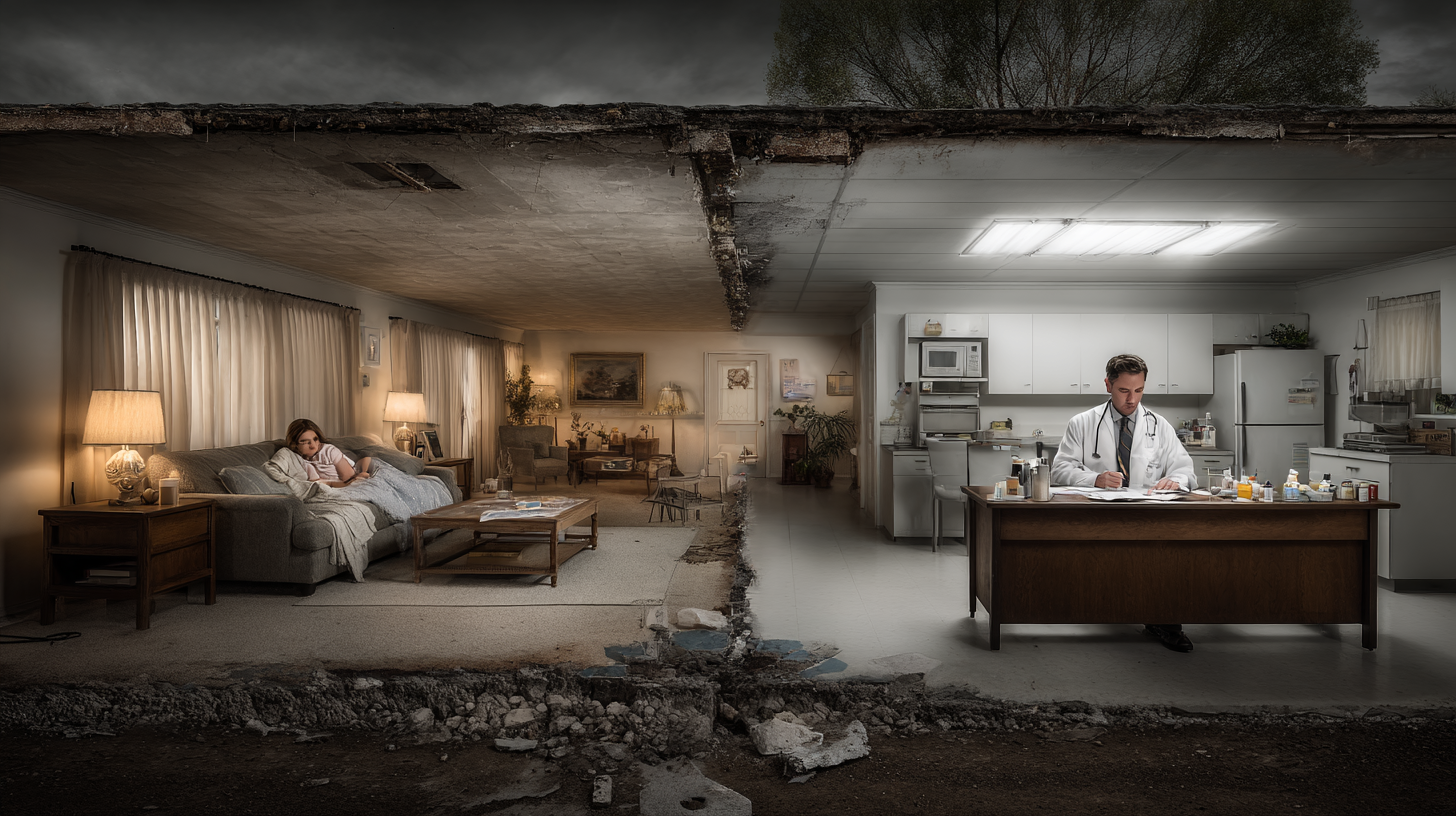
Building Related Illness (BRI) Is Making Millions Sick — And Most Don’t Know It
1 in 2 Americans live in conditions that cause Building Related Illness — chronic fatigue, brain fog, and unexplained symptoms caused by mycotoxins and contaminants in their home. Doctors miss it. Remediation often doesn’t fix it. The building is the diagnosis.
Join the waiting list for our AI-Powered BRI Risk Assessment Tool.
Be the first to access our intelligent building health assessment.
Do any of these sound familiar?
BRI doesn’t present as one thing. It mimics dozens of conditions. That’s what makes it so hard to identify — and so easy for doctors to miss.
These symptoms are often caused by specific mycotoxins — toxic compounds produced by mold. Our Mycotoxin Symptom Library breaks down which toxins cause which symptoms, so you can connect the dots between how you feel and what may be in your home.
Visit the Mycotoxin Symptom LibraryQuick Facts
What is BRI?
Building Related Illness is any illness or disease that is linked to contaminants inside of a building.
Most Common Causes
Water damage in homes that leads to mycotoxin-producing molds.
Most Common Symptoms
Mental illness, autoimmune disease, gut issues, and skin issues.
How Many Americans Are Affected?
50%
of Americans live in conditions that cause BRI.
What Is Building Related Illness?
Building Related Illness (BRI) is a category of diagnosable conditions directly attributable to the indoor environment — most commonly caused by water-damaged buildings that harbor mold and produce mycotoxins.
Unlike "Sick Building Syndrome" — a catch-all term from the 1980s for vague, temporary discomfort — BRI refers to measurable, clinical illness with identifiable causes and persistent symptoms that continue until the exposure source is addressed.
The most well-documented form is Chronic Inflammatory Response Syndrome (CIRS), a multi-system condition triggered by biotoxin exposure. CIRS affects the immune system, nervous system, endocrine system, and vascular system simultaneously — which is why patients often present with a bewildering range of symptoms that defy easy diagnosis.
The challenge: most physicians aren’t trained to look for environmental causes. Patients cycle through specialists for years, accumulating diagnoses like fibromyalgia, chronic fatigue syndrome, anxiety, IBS, or "idiopathic" illness — when the root cause is the building they live or work in.
Expert Voices
What the Researchers Say
"Chronic Inflammatory Response Syndrome is a multi-system, multi-symptom illness caused by biotoxin exposure — most commonly from water-damaged buildings."
"Environmental toxins are the primary driver of chronic disease. Mycotoxins from indoor mold are among the most common — and most overlooked."
"Even after remediation, mycotoxins persist on surfaces and in dust. If you don’t address the toxins, you don’t address the illness."
A History of Denial
40 Years of Evidence
The science has been clear for decades. The healthcare system is only now catching up.
WHO coins 'Sick Building Syndrome'
The World Health Organization formally recognizes that buildings can cause acute health effects, estimating up to 30% of new and remodeled buildings have indoor air quality problems.
Mayo Clinic mold study
Landmark research attributes 93% of chronic sinusitis cases to mold exposure, challenging decades of medical assumption that bacteria were the primary cause.
IOM confirms mold-health link
The Institute of Medicine publishes Damp Indoor Spaces and Health, confirming associations between damp buildings and respiratory illness, asthma, and hypersensitivity pneumonitis.
WHO guidelines on indoor air quality
WHO publishes guidelines explicitly stating that dampness and mold in buildings pose a significant health risk to occupants.
GAO report on federal buildings
U.S. Government Accountability Office reports widespread mold issues across federal buildings, with thousands of employee health complaints.
Post-pandemic awareness surge
As people spend more time indoors post-COVID, awareness of indoor air quality and building-related illness reaches mainstream consciousness.
Change the Air Foundation releases military housing report
The Change the Air Foundation publishes a landmark report documenting widespread mold contamination and building-related illness in U.S. military housing, bringing national attention to the crisis affecting service members and their families.