Active · Passive · Together
HEPA is only half the power.
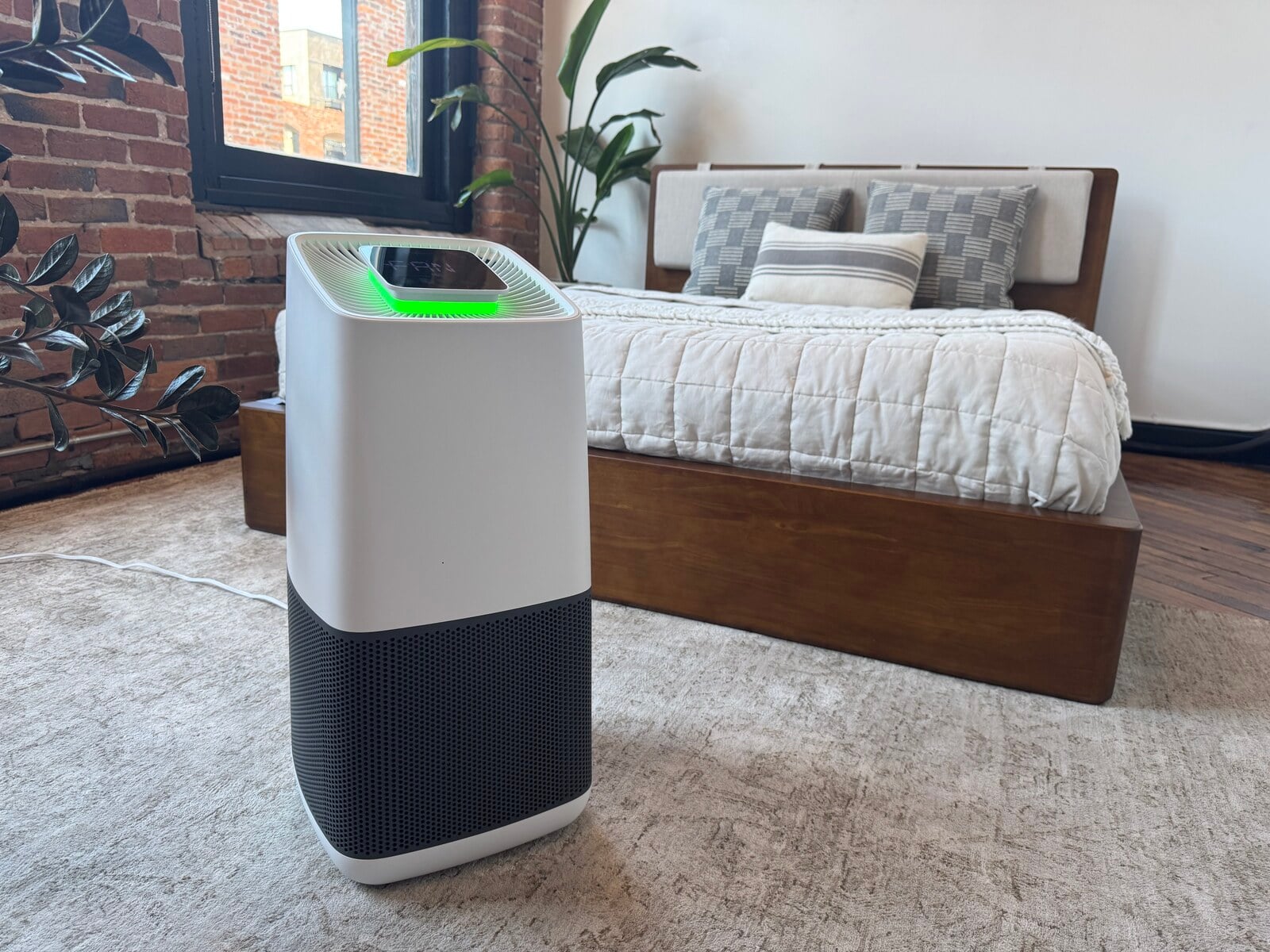
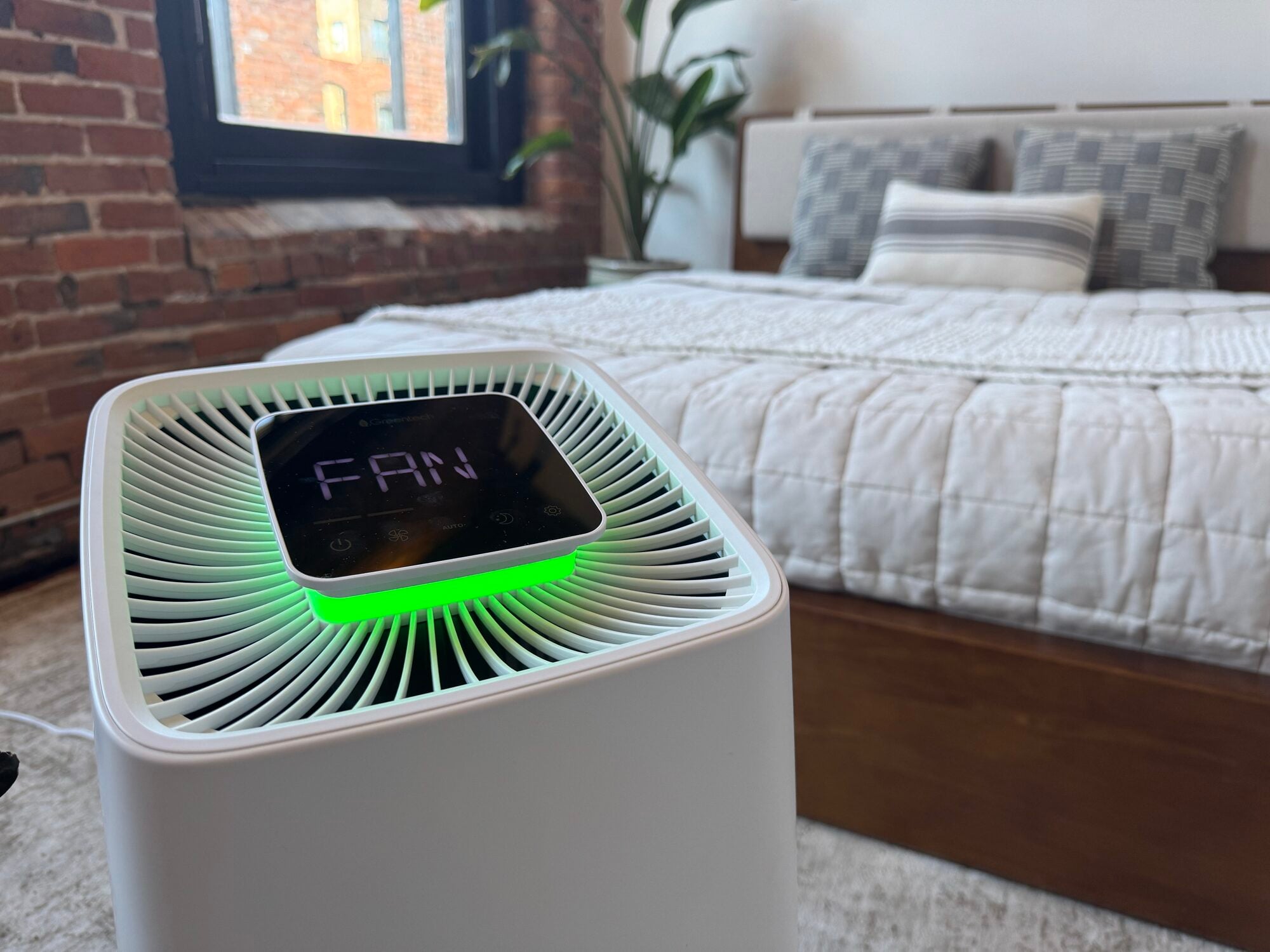
The Superstratum Ion pairs a medical-grade H13 HEPA filter with active bipolar ionization. The HEPA traps particles as air passes through, while balanced ions reach the mold spores, VOCs, and allergens that never drift through a filter — the most powerful air purification available, and the first step in a Superstratum routine.
Ion Room
Ion Pro
Proven, not promised
The questions every air purifier should answer — answered upfront.
MRIGlobal Tested
99.98%
In independent lab testing, the Ion inactivated 99.98% of airborne SARS-CoV-2 in a sealed chamber (~10 air exchanges, MRIGlobal).*
UL 2998 Validated
Zero Ozone
Independently validated to UL 2998 — confirming zero ozone emissions during operation, not a self-declared marketing claim.
CARB Certified
Compliant
Meets California Air Resources Board limits — the strictest indoor air-cleaning standard for ozone in the United States.
Medical-Grade
H13 HEPA
True H13 HEPA filtration captures particles down to 0.25 microns, one tier above the standard HEPA used in most home purifiers.
The Technology
Active and passive. One device.
A HEPA filter can only catch what flows through it. Active ionization reaches what doesn't. Watch them work in opposite directions — pulling air in, pushing ions out — until the whole room moves toward clean.
Inward · Passive Filtration
Medical-grade H13 HEPA captures every particle that passes through.
True H13 HEPA — a tier above standard HEPA — traps particles down to 0.25 microns: pollen, pet dander, smoke, and dust. An ODOGard® odor-bonding coating goes further, chemically bonding to and permanently eliminating the odor molecules most filters only mask.
True HEPA · ≥0.25 μm
Outward · Active Treatment
Two active technologies reach beyond the filter.
Carbon-fiber brushes release a balanced plasma of positive and negative ions into your breathing space, attaching to mold spores, VOCs, and dust so they cluster, lose lift, and drop out of the air. A broad-spectrum UV-A photocatalytic cell creates oxidizers that seek out and inactivate contaminants at the source — covering up to 1,375 sq ft.
airborne SARS-CoV-2 inactivated*
Filtration + Ionization
Two forces working in opposite directions.
The HEPA filter pulls air inward, capturing every particle that passes through it. Bipolar ions move outward — dispersing through the room and attaching to particles so they cluster and drop to surfaces. Together, they push the entire room toward clean.
Inward · HEPA
The filter pulls air to itself.
Air drawn through the unit is scrubbed of particles down to 0.25 microns by the H13 HEPA. With more particles already clustered and drifting toward surfaces and intake, every pass through the filter captures more — not less.
Outward · Ions
Ions disperse through the room.
Bipolar ions travel into corners, fabric, and ceiling space — reaching particles the airflow never touches. Clustered particles fall to surfaces, where the Superstratum cleaning routine removes them for good.
The result: the filter captures more particles per pass, and the Superstratum fogging, gassing, and coating routine has dramatically less to neutralize on the surfaces it treats.
Why filtration alone falls short
A HEPA filter only catches what flows through it.
Most contamination in your home never reaches the filter. It settles on surfaces, hides in soft furnishings, and circulates in air patterns the unit can't reach. Passive filtration is essential — but it's only half the picture.
01
Mold spores cling
Mold spores travel less than they settle. They land on walls, fabrics, and floors before they're pulled toward a filter — and reactivate when moisture returns.
02
VOCs off-gas slowly
Volatile organic compounds release from paint, furniture, and flooring over months. Passive filtration treats only what's currently airborne in the filter's path.
03
Dust avoids the airflow
Most particulate matter settles in still corners — under furniture, against baseboards, on shelves. A filter draws from the center of the room. The edges go untouched.
How bipolar ionization works
Ions reach what filtration can't.
Zoom in to a single mold spore drifting in the air. This is what happens at the molecular scale, millions of times per second, across every cubic centimeter of a treated room.
A charged particle, suspended in air
Mold spores, dust, and VOC molecules carry weak surface charges that keep them buoyant — they ride micro-currents and resist gravity. Most are 0.1–5 μm: small enough to slip past static filtration, large enough to lodge in your lungs.
Bipolar ions seek opposite charge
The unit's carbon-fiber brushes emit a balanced plasma of positive and negative ions — stable charged clusters, not free radicals. They drift through the room for several minutes, naturally migrating toward oppositely charged surfaces and particles.
Charge transfer on contact
When an ion meets a particle, charge transfers in a fraction of a millisecond. The particle clusters with its neighbors and can no longer hold its electrostatic suspension or stay buoyant.
Gravity finishes the job
Without electrostatic lift, gravitational settling takes over. The particle falls to the nearest horizontal surface — where HEPA vacuuming and the Superstratum cleaning routine remove it for good.
How it compares
Compare your shortlist to the Ion.
Pick the purifier you're considering. We'll score it against the Superstratum Ion across the ten dimensions that actually matter — filtration, active treatment, independent pathogen testing, coverage, ozone validation, odor, warranty, and price.
Closest philosophical rival — active destruction (PECO) + HEPA, but no ionization.
Competitor specs and pricing sourced from manufacturer websites as of June 2026; "—" indicates a feature or test the manufacturer does not publish. Prices reflect MSRP and vary with promotions. †The Superstratum CADR figure is the manufacturer's Active CADR (active-treatment rating), not an AHAM-certified CADR; competitor figures are AHAM/manufacturer-rated (smoke–pollen range).
See why people switch to the Ion.
Shop the IonThe Philosophy
Staying healthy inside your home is very simple.
The Ion Pro and Ion Room are powerful components of the Superstratum system — but no single device finishes the job alone.
It depends upon clearing the air and surfaces of the things that make you sick. And while many processes and devices claim to do this, the truth is no one device does.
What removes the contaminants that make you sick inside a home is a combination of things. The first is removing those contaminants from the air — and that requires multiple technologies, both passive and active filtration.
But even the best air filters won't capture all the air in a building, or capture the toxins that are too small for even the best HEPA filters.
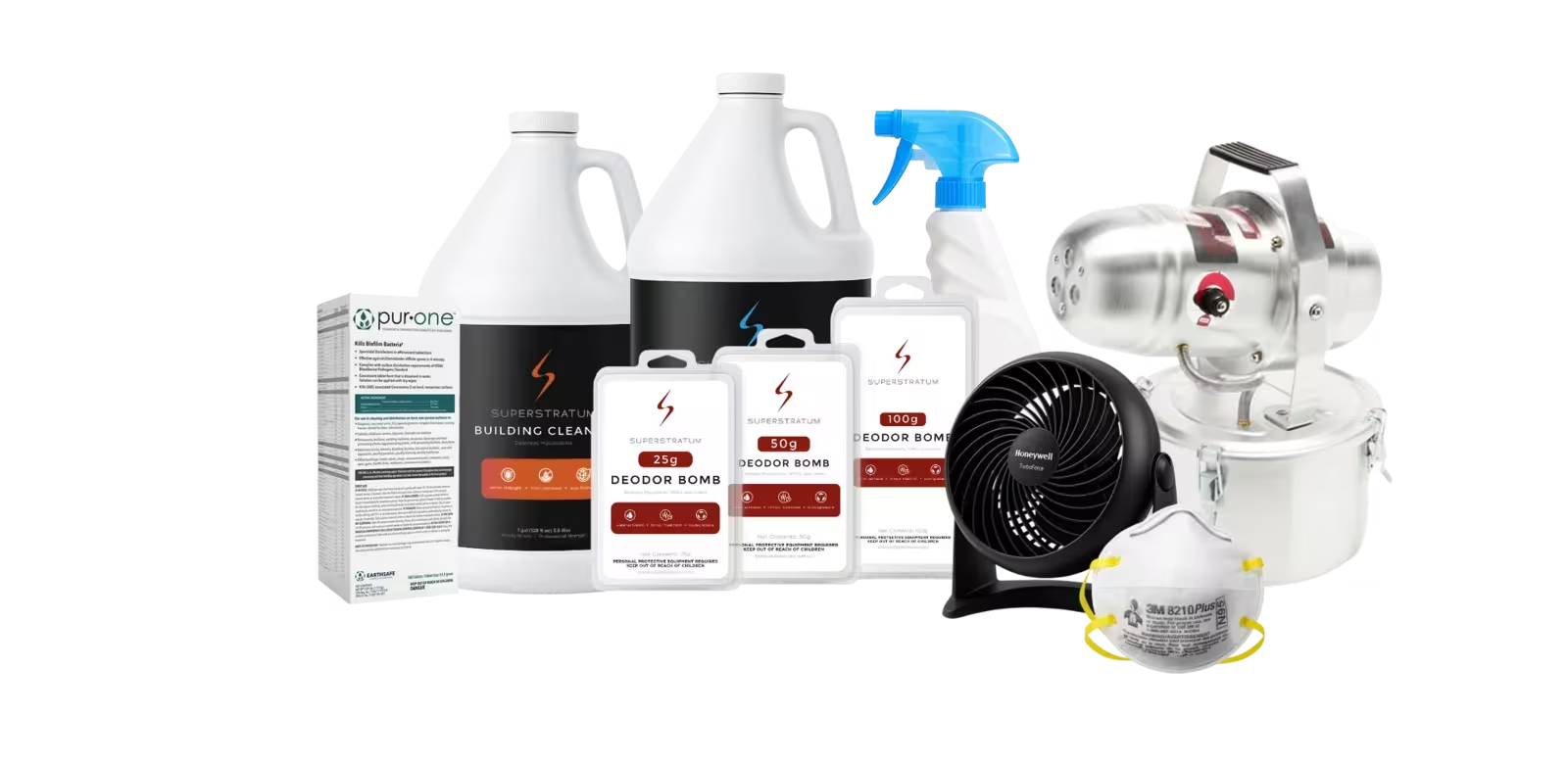
That's where the Superstratum routine comes in. Fogging, gassing, and coating — a process ensuring that the air and surfaces never accumulate mold, mycotoxins, bacteria, VOCs, or endotoxins.
The Superstratum Routine
The Ion is step one. Then the routine takes over.
Bipolar ions drop airborne particles to surfaces — where Superstratum cleaners take over to complete the cycle.
Ion clears the air
Bipolar ions disperse across up to 1,375 sq ft, treating air the HEPA can't draw in.
Particles fall
Clustered mold spores, VOCs, and dust lose suspension and settle to floors and surfaces.
Vacuum with HEPA
Settled particles are captured by HEPA vacuuming — taken out of circulation completely.
Clean with Superstratum
Surface residues are neutralized with Superstratum cleaners. The cycle completes.
Specifications
Engineered for real-world performance.
Independently tested for pathogen inactivation, HEPA capture efficiency, and zero-ozone operation. UL 2998 validated. CARB certified.
Order the Ion
One system. Two sizes. The full Superstratum routine.
*SARS-CoV-2 inactivation claims are based on independent third-party laboratory testing (MRIGlobal); 99.98% reduction of airborne SARS-CoV-2 was achieved in approximately 10 air exchanges (3 min 20 sec) within a sealed Class III biological-safety test chamber. Real-world results vary with room size, ceiling height, ventilation, and air-exchange rate. Coverage areas are estimates. UL 2998 validated for zero ozone emissions; CARB certified. The 1-year limited warranty is conditional on completing recommended annual maintenance. The Superstratum Ion is not a medical device and is not intended to diagnose, treat, cure, or prevent any disease. Pricing subject to change.